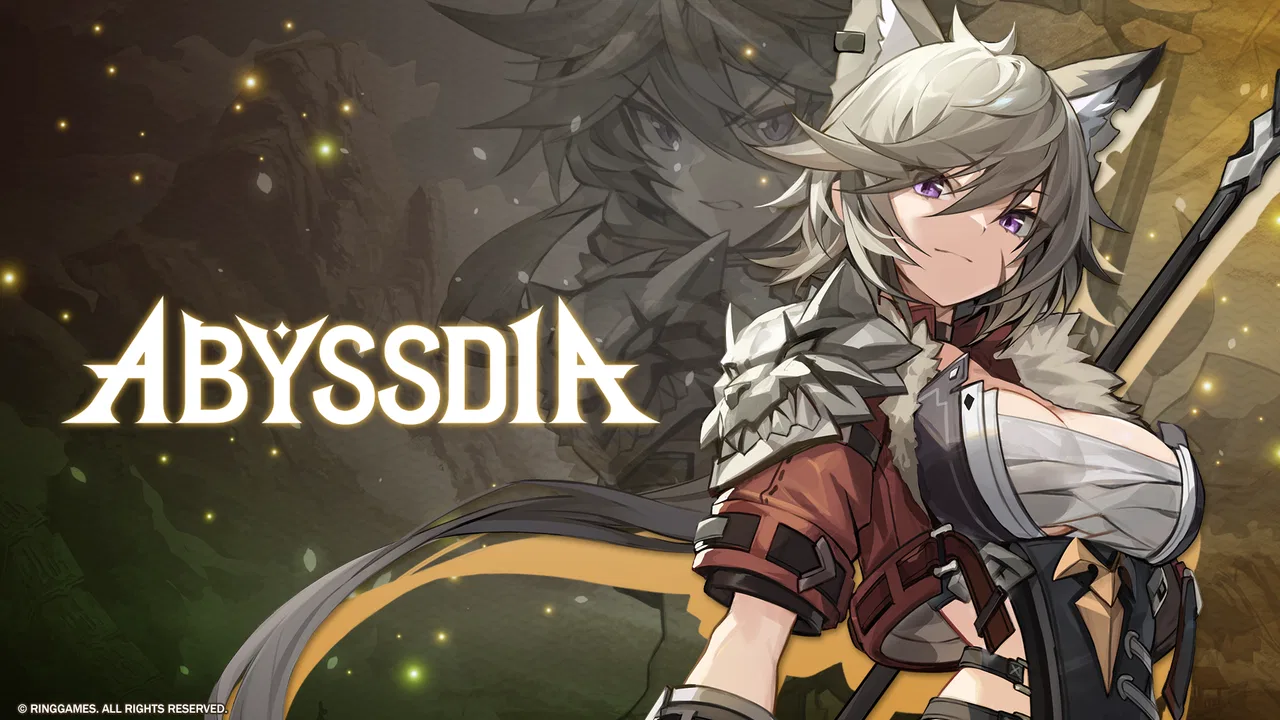
ABYSSDIA
- 4.5
- Rating
- 100.00K
- Installs
- Free
- Price

 Analysis by App-foxy
ABYSSDIA is a role-playing game from NHN Corp. built around the idea of chained action, and that gives it a more active identity than a menu-heavy RPG. I approached it expecting a game that would reward quick decisions rather than simply asking me to tap through battles, and that distinction is important when deciding whether it deserves space on your phone. It is free to download, carries a Teen content rating, and presents itself with the compact store summary “The Chain Action RPG.”
My overall impression is that this is best viewed as a focused experiment in making role-playing combat feel more connected and immediate. It is not automatically the right choice for someone who wants a slow, story-first adventure or a completely hands-off auto-battler. The appeal depends on whether you enjoy learning a combat rhythm, adjusting to pressure, and spending time improving your play rather than only collecting characters or clearing daily tasks.
How ABYSSDIA feels in actual play
The central phrase to keep in mind is “chain action.” Even without reducing the game to a simple button-mashing exercise, that wording suggests a combat loop where the order and timing of actions matter. I found that framing more useful than treating it as just another role-playing game. The fun comes from trying to make separate actions feel like one deliberate sequence, especially when a careless move breaks the momentum you were building.
You May Also Like

 AccuWeather: Weather Radar
AccuWeather Review: A Quick, Clear Forecast for Everyday Decisions
For everyday plans, the best forecast is the one you can understand quickly. AccuWeather makes rain timing, radar, and local conditions easy to act on, with a few trade-offs.

 Hill Climb Racing
Why Hill Climb Racing Still Turns Crashes Into One More Run
A tiny car, a bumpy hill and one more upgrade: Hill Climb Racing keeps resurfacing because its simple chaos makes every near-miss feel personal.

 AliExpress - Shopping App
AliExpress Makes Global Shopping Feel Personal, but Shoppers Bear the Risk
AliExpress turns a global marketplace into a pocket-sized discovery engine. Its reach is useful, its shopping loop compelling, and its trade-offs easy to miss.

 Lords Mobile: Kingdom Wars
Lords Mobile Is a Kingdom-Building Routine, Not a Quick Match
A case-by-case verdict on the building, battles, device demands, and social commitments that make Lords Mobile rewarding for some players and exhausting for others.

 PDF Scanner app - TapScanner
TapScanner Makes Paperwork Easier to Capture, Check, and Share
TapScanner makes scanning with a phone feel less like a rescue operation and more like a dependable step in getting work done. Its capture tools are useful, though not flawless.

 Block Blast!
 Shows How Much a Puzzle Game Can Leave Out
A quiet grid game shows why puzzle players increasingly value instant clarity, repeatable skill and low-pressure play—and where the genre still needs to catch up.
More From Our News Desk
View All News


That approach changes how I read the battlefield. In a conventional turn-based RPG, I can often choose the strongest available command and wait for the result. In a chain-focused game, the better question is usually how one action prepares the next. A weaker move may be worthwhile if it keeps an attack sequence alive, creates a safer opening, or lets me respond to what an opponent is doing. This gives ordinary encounters more texture than their difficulty alone might suggest.
There is also a useful difference between understanding a character or party on paper and actually controlling that setup. A list of abilities can look impressive, but a chain system only becomes satisfying when the actions fit together naturally. I recommend spending early sessions testing combinations rather than rushing through every available objective. Learning which moves feel reliable under pressure will help more than blindly chasing a high-damage option.
One practical habit is to treat the opening moments of a fight as information-gathering time. Instead of immediately using every powerful action, I would watch how the encounter responds to the first sequence. If the chain feels unstable, I would simplify the pattern and prioritize consistency. If it flows cleanly, I would then experiment with a more ambitious sequence. This is a small adjustment, but it prevents the common mistake of confusing a flashy chain with a dependable one.
A combat system that rewards attention
The strongest part of the concept is its potential to make familiar RPG battles feel hands-on. I like games that give me a reason to stay mentally present, and a chain-oriented structure can do that without requiring every encounter to be difficult. The satisfaction comes from recognizing a pattern, correcting a mistake, and eventually performing a sequence that previously felt awkward.
The trade-off is that this kind of design can become tiring when I only have a few minutes or when I want a relaxed session. A conventional auto-battle RPG is often better for background play, commuting, or clearing routine content while my attention is elsewhere. ABYSSDIA makes more sense when I am willing to engage with the battle instead of treating it as a task to complete as quickly as possible.
That distinction also affects the learning curve. Players familiar with action RPGs may appreciate the need to react and connect moves, while players coming from purely menu-driven role-playing games may need more time to develop the right rhythm. I would not judge the game after a brief first session. The early period is more about building a mental model of the chain system than immediately seeing its full value.
Where the free entry matters
The game is free, which makes trying it much easier to justify. I can install it, see whether the combat language suits me, and decide from experience rather than committing money before understanding the loop. That is the clearest value of the free entry: the initial decision is about time and attention, not an upfront purchase.
There are in-app purchases ranging from $0.99 to $99.99 per item. That wide span is important when considering value. A free starting point does not mean every possible convenience, upgrade, or optional purchase will feel equally worthwhile. I would approach the paid layer cautiously and first determine whether I enjoy the chain-based combat without spending anything.
For me, the sensible order is simple: play enough to understand the combat, identify whether progression feels satisfying, and only then consider a purchase. Buying early can be reasonable for someone who already knows they enjoy this style of RPG, but it is a poor substitute for deciding whether the core game itself is fun. The free access gives players a chance to make that distinction.
I also would not treat the highest-priced item as a benchmark for the game’s value. The meaningful question is what the free experience already provides and whether any optional spending improves a part of the game I genuinely use. If a purchase only reduces friction in a loop I do not enjoy, it is not good value for me, regardless of the item’s size or presentation.
What makes the game worth returning to
ABYSSDIA’s replay value depends on whether its chain system continues to offer decisions after the novelty fades. The first successful sequence is enjoyable, but a good RPG needs more than the initial discovery. I look for reasons to refine execution, change my approach, and revisit encounters with a better understanding of how actions connect.
A useful personal test is to ask whether I am improving at the game or merely accumulating progress. If I can explain why a chain failed and adjust my next attempt, the system is giving me meaningful feedback. If every fight becomes a routine search for the same strongest input, the action label loses much of its importance. This is why I would pay attention to the quality of decision-making rather than simply the number of rewards earned.
The game is also more appealing for players who enjoy a gradual mastery curve. Someone who likes discovering efficient patterns, comparing approaches, and practicing execution may find more value here than someone who only wants a large story campaign. The design invites an active relationship with combat, so the player’s own curiosity becomes part of the content.
That can be a strength in short sessions. I can focus on improving one aspect of my play instead of needing a long uninterrupted block of time to feel productive. For example, during an evening break, I might concentrate on keeping a chain stable rather than trying to finish a major progression goal. That makes the game easier to approach casually while still giving the session a clear purpose.
Limitations I would consider before installing
The first limitation is the same feature that gives the game its identity: chained action will not appeal to everyone. If I prefer automatic combat, relaxed collection, or a story that carries me from scene to scene with minimal mechanical involvement, I would probably choose a different role-playing game. ABYSSDIA asks me to care about how actions connect, and that is a commitment rather than a cosmetic feature.
The second issue is the possibility of friction between experimentation and progression. Players may want to test unusual combinations, but role-playing games often encourage investment in familiar, reliable options. If the game makes experimentation feel costly, the chain system could become narrower than it first appears. My advice is to avoid spending resources simply because an option looks powerful; first check whether it fits the way you actually play.
There is also a difference between a game being free and being inexpensive over time. The absence of an upfront charge is helpful, but the available purchase range means I would set a personal spending limit before becoming invested. This is especially relevant for players who are sensitive to progression pressure. A clear budget keeps the decision about value in the player’s hands instead of letting the game define what “necessary” spending feels like.
The Teen rating is another reason to consider the intended audience before downloading. It signals that the game is not positioned as a universally suitable children’s title. Parents should make their own decision based on the player’s age and comfort with the game’s content, while adult players can reasonably see the rating as part of the game’s more mature presentation.
Who will get the most from it
I would recommend ABYSSDIA to players who want a role-playing game with a more active battle identity. It is a particularly good match for someone who enjoys learning systems through repetition, testing action order, and turning a messy encounter into a clean sequence. Players who normally find traditional RPG combat too passive may appreciate having a stronger reason to stay involved.
It can also suit a player who wants a free trial path into the genre. Because there is no purchase required to begin, I can use the early experience to answer the most important question: do I enjoy the way this game asks me to fight? That is more useful than relying on screenshots or a short description, especially when the main appeal is a combat rhythm that has to be felt.
I would be more cautious recommending it to someone who wants a low-maintenance game for background play. If your ideal session involves selecting a team, enabling automatic battles, and checking back later, the chain-action focus may feel like unnecessary work. Likewise, players who dislike repeating encounters to improve execution may not find enough satisfaction in refining a battle sequence.
For a realistic everyday scenario, imagine having a short break after work. If I want to actively reset my attention, I can play a few encounters while focusing on one chain pattern and stop after making progress on that skill. If I am exhausted and only want something passive, I would choose a less demanding RPG instead. The same game can be a good fit or a poor fit depending on the kind of break I need.
How it compares with familiar RPG alternatives
Compared with a standard turn-based mobile RPG, ABYSSDIA places more emphasis on the connection between actions. A traditional alternative may be better when I want careful planning at a slower pace, especially if I enjoy studying menus and making decisions without execution pressure. ABYSSDIA is the better choice when I want those decisions to feel connected to an active sequence.
Compared with an auto-battler, the difference is even clearer. Auto-focused games are convenient and often easier to fit around a busy schedule, but they can make the player feel removed from the outcome. ABYSSDIA’s appeal is the opposite: I am expected to pay attention and make the chain work. That makes it more engaging for focused sessions but less convenient as a background activity.
Compared with a purely action-oriented RPG, the role-playing structure still matters. Players who want constant reflex challenges may prefer a game built entirely around direct movement and immediate reactions. ABYSSDIA should appeal more to someone who wants action decisions within an RPG framework, where progression and tactical choices remain part of the experience.
The comparison is therefore not about which category is universally better. It is about the kind of involvement I want. ABYSSDIA occupies a middle ground between passive RPG management and uninterrupted action, and its value rises when that middle ground matches my habits.
Practical advice for starting without wasting value
My first tip is to learn one dependable chain before chasing variety. A reliable sequence gives me a baseline for judging new options. Without that baseline, every failed attempt can feel like a problem with the game when it may simply be a problem with unfamiliar timing or ordering.
My second tip is to separate testing from progression. When I am trying a new approach, I would use a low-pressure opportunity rather than risking an important objective. This lets me discover whether a chain is genuinely useful or only looks impressive in ideal conditions. It also protects my resources from being spent on experiments that do not match my play style.
My third tip is to review mistakes by category. I would ask whether the issue was poor timing, an unsuitable action order, an interruption, or an overly ambitious sequence. That small habit turns frustration into a practical lesson. It is more productive than repeatedly trying the same chain and hoping it works on the next attempt.
Finally, I would delay optional spending until I know what kind of player I am in this game. Someone who plays regularly and values convenience may view a purchase differently from someone who only opens the game occasionally. Since the game is free to start and individual purchases can reach $99.99, patience is the safest way to judge whether the paid layer adds real enjoyment rather than simply shortening a process I have not yet learned to like.
Device and release details that matter
The current version is 2.3.2, and the listed minimum operating system is Android 7.0. That makes the entry requirements relatively approachable for players using older Android hardware, although the practical experience will still depend on the phone’s overall performance and available space. I would check that my device has enough room and that I can play comfortably before committing to longer sessions.
The game was released on February 12, 2026, and has already reached over 100 thousand installs. Its average rating is 4.5 from around 7.2 thousand ratings, with 93 written reviews. Those figures suggest that the game has attracted a meaningful early audience, but I would still treat them as a starting signal rather than a replacement for trying the combat myself. A rating cannot tell me whether its particular chain system matches my preferences.
The Teen rating, free entry, and Android compatibility together make the initial decision fairly straightforward: install it if the combat concept interests you, then judge it by how quickly the chaining feels natural. The more important commitment is not the download but the attention required to get past the learning stage.
My recommendation after weighing the value
ABYSSDIA is worth trying for players who want an active RPG combat loop without paying upfront. Its strongest argument is not the size of its feature list; it is the possibility that connecting actions will make each encounter feel more deliberate and satisfying than a routine tap-through battle. That is a specific appeal, and it will matter much more to some players than to others.
I would recommend the free version to curious RPG fans, especially those who are tired of automatic battles and want a reason to improve their execution. I would not recommend spending immediately. Play first, decide whether the chain system remains enjoyable after the first successful sequences, and only consider purchases that support a style of play you already know you like.
My buy-or-skip verdict is therefore clear: try it for free, but skip it if you want passive progression or a purely traditional RPG. The game delivers its best value when I treat it as a hands-on combat experience rather than another collection-focused mobile title. If that sounds like the kind of involvement you want, NHN Corp.’s game has a fair chance of becoming a worthwhile addition to your rotation.
For me, the deciding factor is the chain mechanic’s ability to turn improvement into its own reward. When I want an interactive role-playing session and am willing to learn through practice, the game has a convincing reason to be installed. When I want convenience above all else, another alternative will serve me better. That honest split is exactly why the free starting point matters: I can discover which side of that decision I am on without paying first.
FAQs for ABYSSDIA
01What is ABYSSDIA and what makes it unique?
ABYSSDIA is an immersive game that combines elements of adventure, strategy, and puzzle-solving within a dark fantasy world. Its unique feature lies in its intricate storyline and stunning graphics that captivate players from the start. The game also offers a dynamic soundtrack and challenging puzzles, setting it apart from other games in the genre.
02Is ABYSSDIA available for both Android and iOS devices?
Yes, ABYSSDIA is available for download on both Android and iOS platforms. Users can find it on the Google Play Store and the Apple App Store, ensuring accessibility to a wide range of mobile devices. This cross-platform availability allows more players to enjoy the game’s captivating experience.
03Does ABYSSDIA require internet connectivity to play?
ABYSSDIA is primarily designed to be played offline, making it convenient for users who may not always have access to a stable internet connection. However, certain features like updates or leaderboards might require online access. This allows players to enjoy the game anytime and anywhere without worrying about connectivity issues.
04What are the in-app purchase options available in ABYSSDIA?
ABYSSDIA offers a variety of in-app purchases that enhance the gaming experience. Players can buy additional in-game currency to unlock special items, skins, or power-ups. While the game is free to play, these optional purchases can provide advantages or aesthetic enhancements, allowing players to customize their gameplay.
05Is ABYSSDIA suitable for all age groups?
ABYSSDIA is designed for a mature audience due to its dark fantasy themes and complex puzzles. It is recommended for players aged 12 and above. Parents should consider the game’s content and themes to determine its appropriateness for younger players, ensuring it aligns with their expectations and comfort levels.
Pros
- Intuitive user interface design.
- Rich and immersive graphics.
- Frequent updates with new content.
- Smooth and responsive performance.
- Engaging storyline with depth.
Cons
- Consumes significant battery life.
- Requires constant internet connection.
- Limited customization options.
- In-app purchases can be costly.
- Occasional bugs in certain levels.

ABYSSDIA
Gallery